


New Paragraph
Clinical Governance & Compliance Support
Supporting healthcare organisations to strengthen governance systems, improve compliance, manage risk, and build confidence through practical healthcare expertise.
Why Clinical Governance Matters
Clinical governance provides the framework through which healthcare organisations maintain and continuously improve the quality, safety, and effectiveness of care.
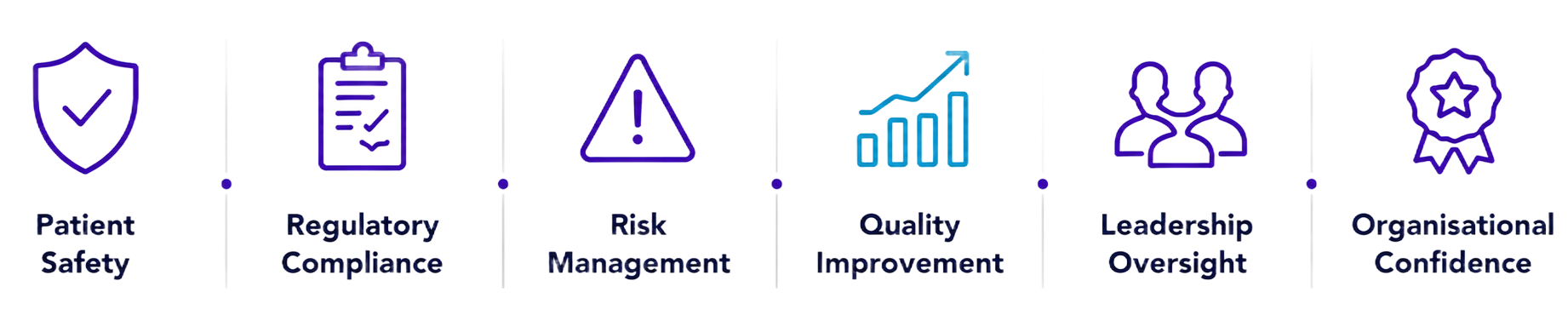
Strong governance supports:
Common Clinical Governance Challenges
Unclear Governance Structures
Under-reporting, inconsistent investigation, and limited organisational learning.
Limited Assurance
Difficulty demonstrating oversight and organisational control.
Inconsistent Auditing
Audit programmes that lack structure, ownership, or meaningful follow-up.
Risk Management Gaps
Risks identified but not effectively monitored or mitigated.
Policy Management Issues
Outdated documentation and inconsistent review processes.
Compliance Monitoring
Limited visibility of regulatory and governance performance.
Leadership Oversight
Creating environments where staff feel safe to raise concerns, report incidents, and challenge unsafe practice.
Organisational Growth
Governance systems struggling to keep pace with expansion.
How We Support Organisations
The ACS Clinical Governance Framework
(7 Pillars)
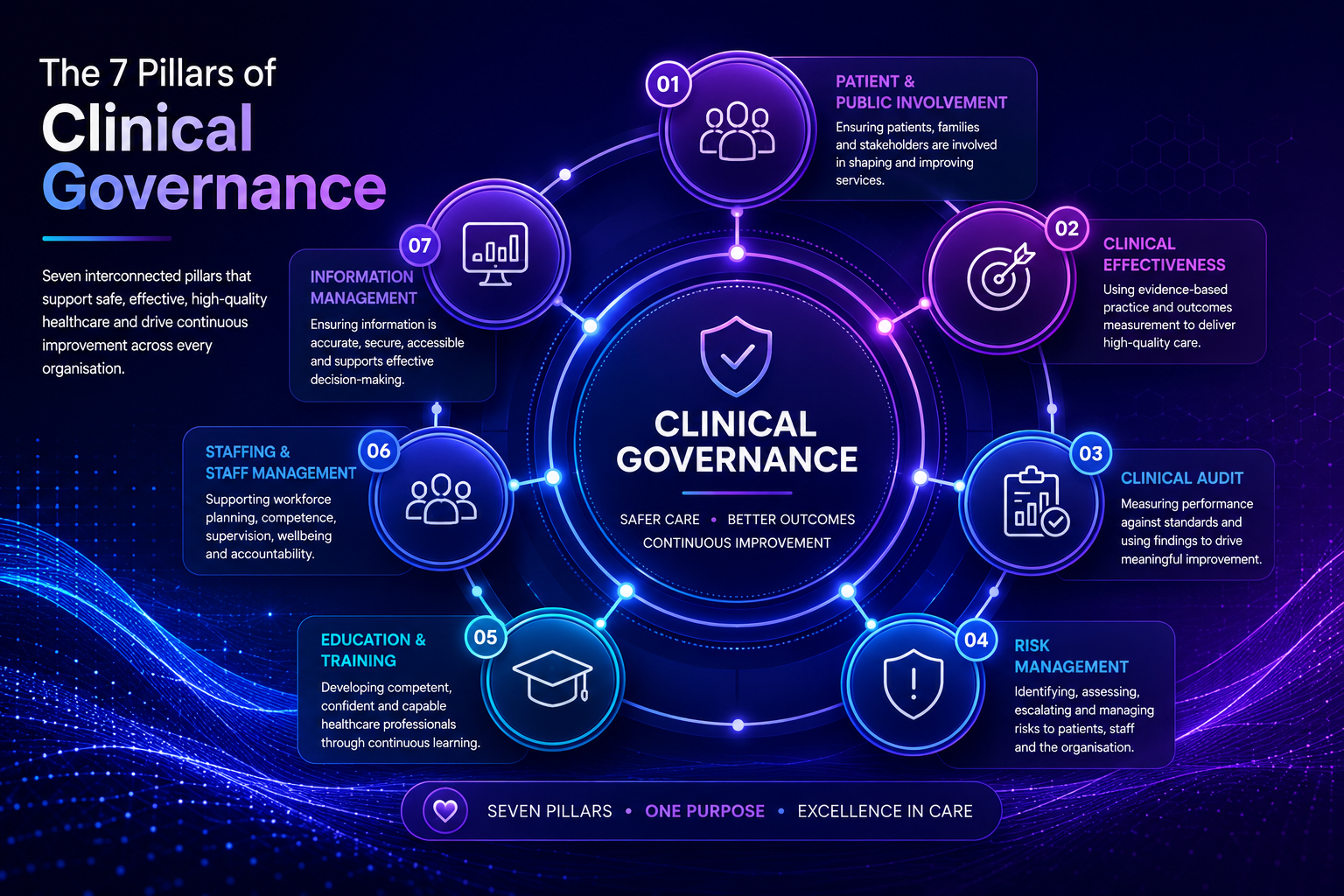
Strong healthcare organisations do not rely on a single governance process or compliance activity. Instead, they create balance across a number of interconnected areas that collectively support quality, safety, assurance, and continuous improvement.
Our Clinical Governance Framework is built upon seven core pillars that underpin effective healthcare delivery. Together, these pillars provide the structure needed to strengthen leadership, improve patient outcomes, manage risk, support staff, and create confidence that services are operating safely and effectively.
Whether preparing for inspection, strengthening governance systems, improving patient safety, or supporting organisational growth, these pillars provide the foundation for sustainable healthcare excellence.
Frequently Asked Questions
Practical answers to common questions about Clinical Governance, governance support, inspections, and regulatory readiness.
What is clinical governance?
Clinical governance is the framework through which healthcare organisations are accountable for continuously improving the quality, safety, and effectiveness of the services they provide.
It brings together areas such as patient safety, risk management, clinical audit, staff development, information governance, and continuous improvement to support high-quality care.
Why is clinical governance important?
Effective clinical governance helps organisations deliver safer care, improve patient outcomes, manage risk, meet regulatory requirements, and maintain confidence among patients, staff, commissioners, and regulators.
Strong governance provides assurance that services are operating safely and effectively.
What does a clinical governance review involve?
A governance review assesses the systems, processes, structures, and controls that support quality and safety within an organisation.
This may include reviewing governance frameworks, committee structures, risk management processes, clinical audit programmes, policies and procedures, incident management, compliance monitoring, and organisational oversight.
How often should governance systems be reviewed?
Most healthcare organisations should formally review their governance arrangements at least annually.
However, reviews may be beneficial following significant organisational change, rapid growth, service expansion, regulatory concerns, or preparation for inspection.
What is the relationship between clinical governance and CQC compliance?
Clinical governance underpins many of the areas assessed during CQC registration and inspection processes.
Strong governance systems help organisations demonstrate leadership, oversight, quality assurance, patient safety, risk management, and continuous improvement.
How can clinical governance improve patient safety?
Clinical governance creates the structures that enable organisations to identify risks, learn from incidents, monitor performance, and implement improvements.
When governance systems are effective, organisations are better positioned to prevent avoidable harm and strengthen patient outcomes.
What governance structures should healthcare organisations have?
Governance arrangements will vary depending on the size and complexity of the organisation, but typically include:
- Clear leadership and accountability structures
- Governance committees or forums
- Risk management processes
- Clinical audit programmes
- Incident reporting systems
- Compliance monitoring arrangements
- Policy and document management systems
- Quality improvement processes
What are the seven pillars of clinical governance?
The seven pillars of clinical governance are:
- Patient & Public Involvement
- Clinical Effectiveness
- Clinical Audit
- Risk Management
- Education & Training
- Staffing & Staff Management
- Information Management
Together these pillars provide the foundation for safe, effective, and continuously improving healthcare services.
How can ACS support clinical governance improvement?
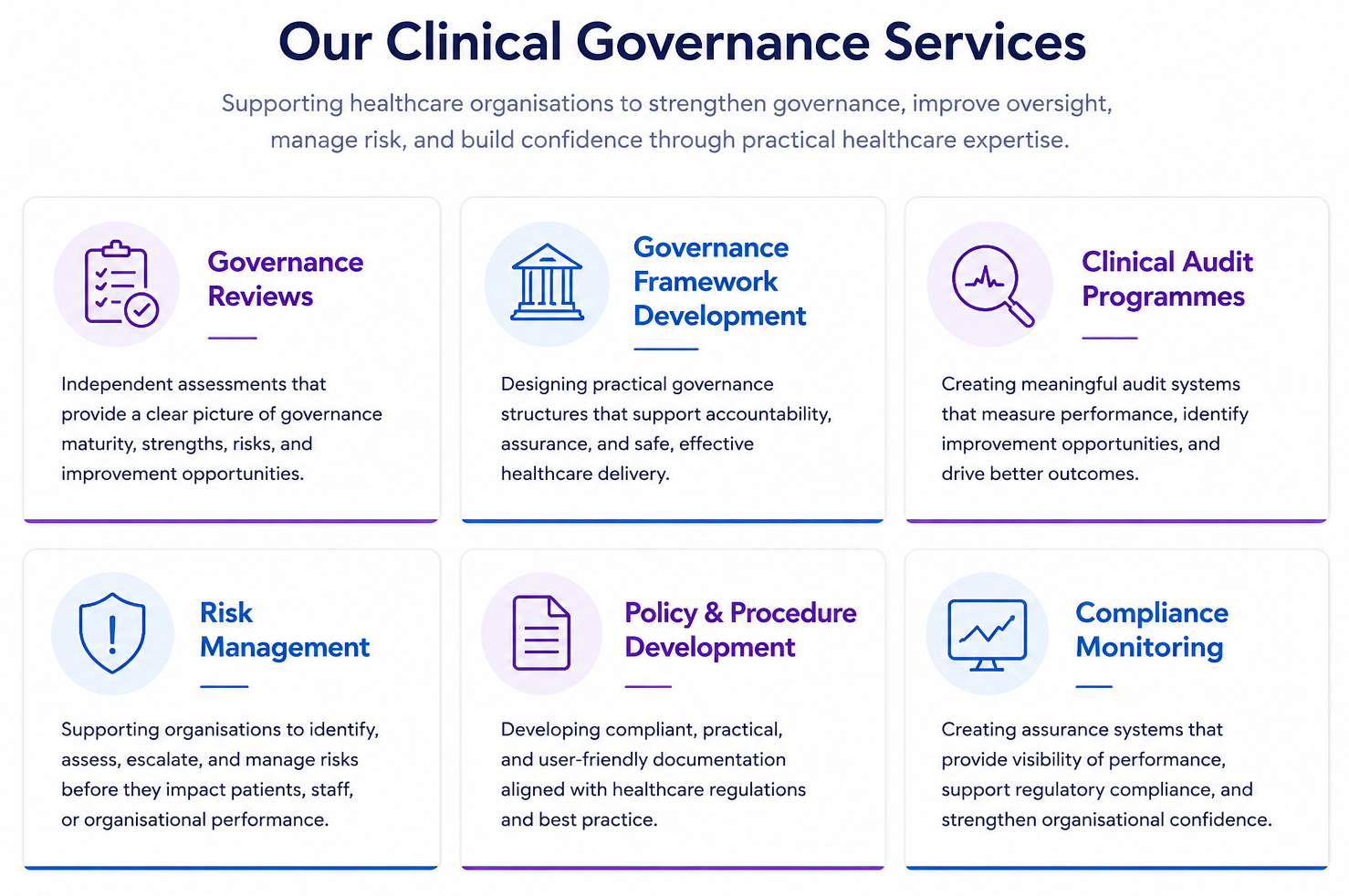
ACS supports healthcare organisations through governance reviews, governance framework development, risk management support, clinical audit programmes, policy development, compliance monitoring, patient safety improvement, and CQC readiness.
Our approach focuses on practical, sustainable improvement rather than tick-box compliance.
Do you work with organisations that are not CQC registered?
Yes.
Whilst many of our clients operate within regulated healthcare environments, we also support organisations that are preparing for registration, providing healthcare services under alternative arrangements, or seeking to strengthen governance and quality systems independently of regulatory requirements.
What are the most common clinical governance challenges facing healthcare organisations?
Common governance challenges include:
- Unclear accountability structures
- Inconsistent audit programmes
- Risk registers that are not actively managed
- Policy management issues
- Limited governance oversight
- Compliance monitoring gaps
- Workforce pressures
- Rapid organisational growth
- Inspection readiness concerns
- Patient safety and incident management challenges
Addressing these challenges requires strong leadership, effective governance systems, and a commitment to continuous improvement.